Wood chippers are essential tools for landscaping professionals, forestry workers, and property managers dealing with substantial green waste. As industrial-grade equipment designed to transform branches, limbs, and organic debris into uniform wood chips, these machines represent a significant efficiency breakthrough for anyone managing large-scale outdoor maintenance. At Shandong Kesen, we engineer wood chippers that combine robust performance with practical innovation, helping businesses transform waste management from a costly burden into a potential revenue stream.
How Modern Wood Chippers Work: The Mechanics Behind the Chips
Contemporary wood chippers operate on relatively straightforward mechanical principles, but their execution requires precision engineering. Most industrial models utilize either a disc or drum chipper mechanism. Disc chippers employ a large steel disc mounted at an angle, with cutting blades attached. When material enters the hopper, it meets the rotating disc which slices it into chips, directing them through sizing screens for consistency. Drum chippers feature a cylindrical drum with blades that pull material through, crushing and cutting simultaneously. Each design has advantages: disc chippers typically produce more uniform chips ideal for landscaping, while drum chippers handle variable diameters more effectively.
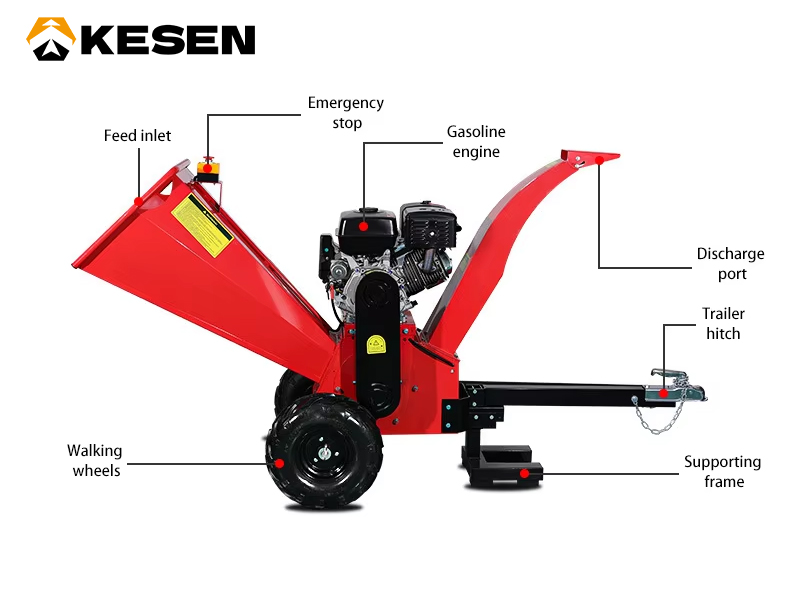
Critical to performance is the power source. Most professional wood chippers utilize gasoline or diesel engines ranging from 10 to over 100 horsepower, with hydraulic systems often managing feed mechanisms. At Shandong Kesen, our models incorporate heavy-duty engines with optimized torque curves specifically for the sudden resistance changes encountered when processing mixed materials.
Key Features That Differentiate Professional-Grade Equipment
When selecting a wood chipper for commercial use, several features separate adequate machines from exceptional ones:
Cutting Mechanism Quality: Industrial-grade hardened steel blades with specialized heat treatment last significantly longer and maintain sharpness. Our chippers feature replaceable carbide-tipped blades that can process thousands of cubic yards before requiring rotation or replacement.
Feed System Design: Self-feeding mechanisms with adjustable speed hydraulics dramatically improve operator safety and productivity. Look for models with anti-jam technology that automatically reverses when detecting overload conditions.
Discharge Control: Adjustable chip direction with telescopic or rotating chutes allows operators to precisely direct output into trucks or piles. Some advanced models include integrated blowers for longer-distance chip placement.
Mobility Considerations: For operations covering multiple sites, trailer-mounted units with proper weight distribution and braking systems are essential. Our commercial models feature road-approved axles and lighting for safe transport between locations.
Safety Innovations: Beyond basic mechanical safeguards, modern chippers incorporate electronic shutdown systems, emergency stop buttons at multiple positions, and feeding mechanisms that minimize manual contact with material.
Applications and Benefits: Beyond Basic Waste Reduction
While waste reduction remains the primary function, modern wood chippers unlock additional value streams:
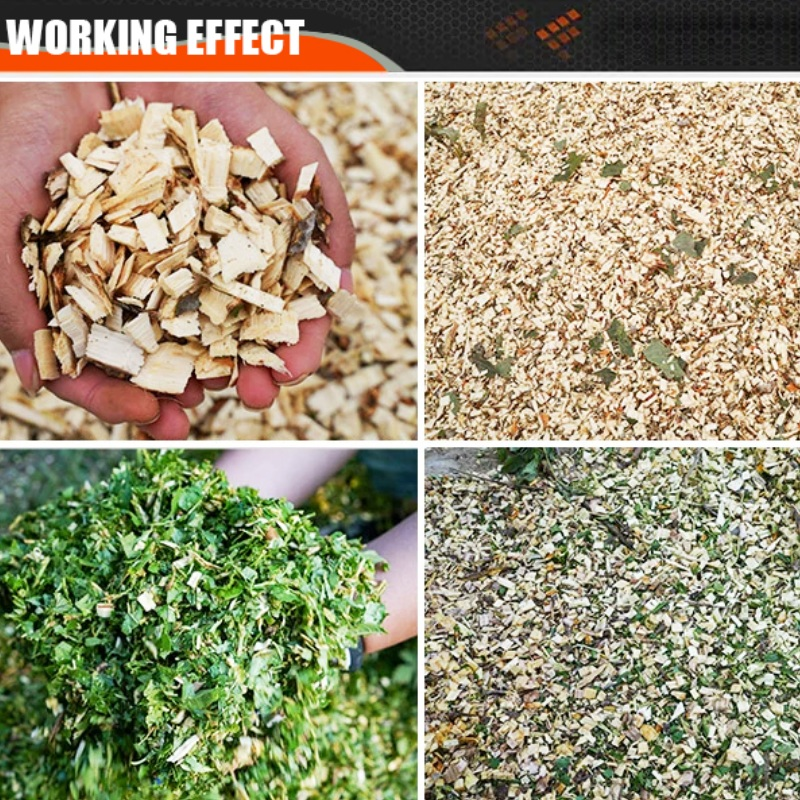
Mulch Production: Uniform wood chips serve as premium landscaping mulch, suppressing weeds while retaining soil moisture. Different tree species produce chips with varied decorative appearances.
Biomass Fuel: Processed to proper specifications, wood chips become valuable biomass for heating systems in institutional or industrial facilities.
Erosion Control: In construction and land reclamation, wood chips effectively stabilize soil on slopes and disturbed areas.
Compost Acceleration: Properly sized chips integrate into composting operations, providing necessary carbon balance to nitrogen-rich green waste.
Pathway Material: In parks, gardens, and recreational areas, wood chips create attractive, permeable walking surfaces.
Selecting the Right Wood Chipper for Your Operation
Matching equipment to your specific needs prevents underperformance and unnecessary expense. Consider these factors:
Material Volume and Type: Estimate daily/weekly processing requirements. Mixed material with leafy branches has different handling characteristics than clean limb wood.
Maximum Diameter Capacity: Purchase slightly beyond your current typical needs to accommodate occasional larger material.
Transport Requirements: Will the chipper remain stationary or move between sites? Road-towing requirements influence design choices.
End-Use Requirements: Chip size preferences for your applications determine necessary screen configurations.
Service and Support: Industrial equipment requires maintenance; ensure parts availability and technical support accessibility.
At Shandong Kesen, our engineering team specializes in configuring wood chippers for diverse operational environments. From municipal forestry departments to large-scale landscaping contractors, we've developed solutions addressing unique regional challenges—whether processing tropical hardwoods, managing vineyard prunings, or clearing storm-damaged urban canopy.
The transition from viewing wood waste as disposal problem to recognizing it as potential resource represents both environmental responsibility and business wisdom. With the proper equipment, what was once a cost center can become a value-added component of your operations. Investing in a commercial wood chipper isn't merely purchasing a machine—it's acquiring a system that transforms your relationship with organic materials, converting inevitable green waste into manageable, often marketable products.
 Hot News
2026-06-16
2024-12-26
2024-12-26
2024-10-11
2024-09-18
2024-09-09
Kesen Machinery was founded in 2003 with the goal of producing high-quality products for customers and providing world-class equipment support for all forestry and construction customers.
Copyright © Shandong Kesen Machinery Manufacturing Co., Ltd. All Rights Reserved- Privacy Policy- Blog
 EN
EN