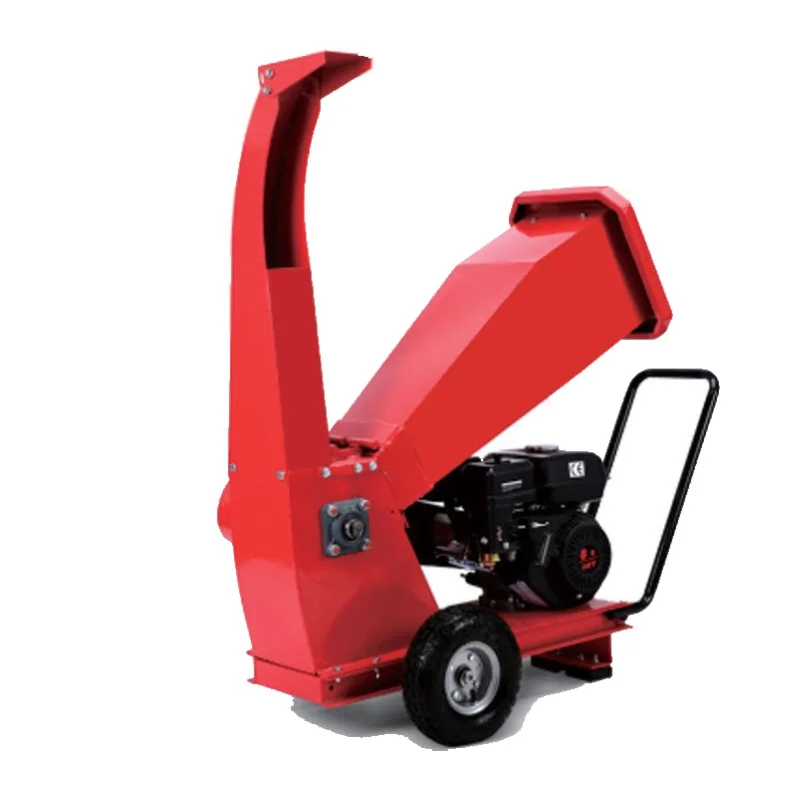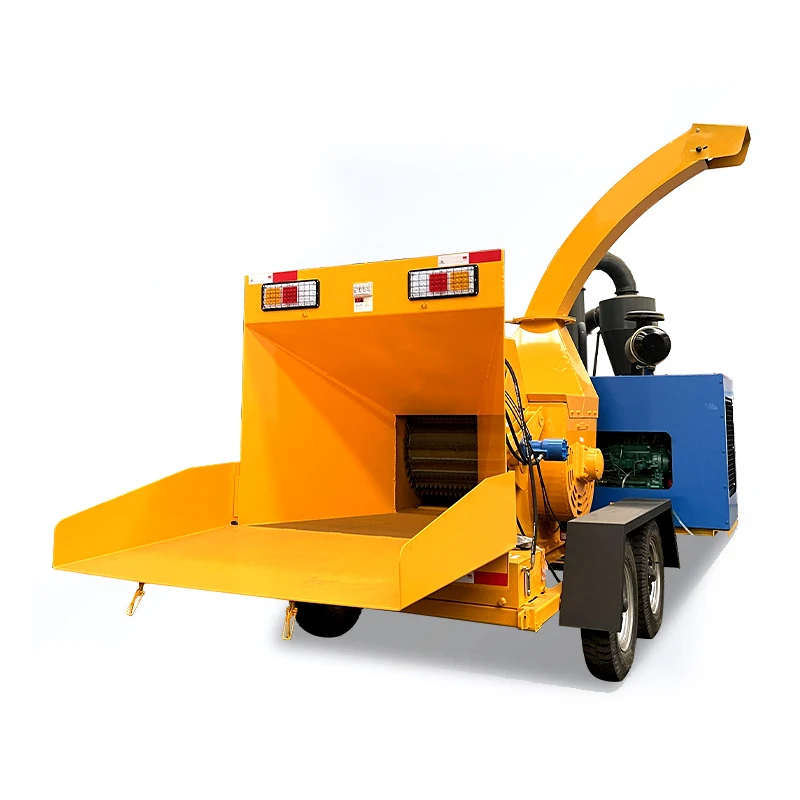
Branches, pruning residues, fallen trees, and other forms of wood waste are often treated as a problem.
But increasingly, they are being viewed as a resource.
Across forestry, agriculture, landscaping, municipal maintenance, and biomass operations, the way wood residues are handled is changing. Instead of simply transporting or disposing of branches, professional users are looking for more efficient ways to process them close to where they are generated.
This is creating a growing role for wood chipping equipment.
According to recent market research, the global wood chipper market is expected to continue expanding through the 2030s, supported by demand from forestry, biomass, landscaping, and wood-waste processing applications. Europe remains an important market, with biomass utilization, forestry operations, and sustainable waste management among the factors supporting demand.
For Kesen Machinery, this development is closely connected with our long-term focus on forestry and garden equipment.
The traditional approach to branches and forestry residues was often straightforward: collect them, transport them, and dispose of them.
However, transportation itself creates costs.
A pile of branches occupies a large volume before processing. Once the material is chipped, its physical volume and form can change significantly, making subsequent handling, transportation, mulching, or biomass utilization more practical.
This means the value of a wood chipper is not only its cutting capability.
It is also its ability to improve the entire material-handling process.
For landscaping companies, orchards, farms, and forestry contractors, transporting unprocessed branches can quickly become inefficient.
Imagine a contractor maintaining an orchard after seasonal pruning. Hundreds or thousands of branches may be generated across the property.
Moving all of that material to another location requires labor, vehicles, fuel, and time.
A mobile wood chipper can instead bring the processing operation closer to the source.
The branches can be processed into chips during the maintenance operation, after which the material can be used or transported more efficiently depending on the user's needs.
This is one reason mobility and practical machine design remain important considerations when selecting a chipper.
Not every user wants exactly the same output.
Wood chips can be used in different ways depending on the material, processing equipment, and local requirements.
Potential applications include:
The appropriate machine therefore depends heavily on the user's material and final application.
A professional buyer should consider factors such as the maximum branch diameter, desired output, working environment, power source, transportation requirements, and expected workload before selecting a machine.
This application-based approach is increasingly important as users become more experienced in evaluating machinery.
A wood chipper should not always be viewed as an isolated machine.
In professional forestry and land management, several pieces of equipment can form a complete workflow.
For example, a forestry operation may involve cutting trees, processing logs with a sawmill, splitting firewood, and processing smaller branches or residues with a wood chipper.
This is why Kesen Machinery maintains a broader forestry equipment portfolio.
Our current product range includes wood chippers and chipper shredders alongside band sawmills and log splitters.
Different machines serve different stages of material processing.
The goal is not to make one machine perform every task, but to provide practical equipment for different stages of the working process.
A common mistake when purchasing a wood chipper is to focus only on the advertised maximum capacity.
Real-world productivity depends on many factors.
Material diameter is important, but so are branch structure, moisture, feeding method, operator experience, blade condition, engine power, and the intended output.
For example, a machine used occasionally on a small farm has very different requirements from one operated every day by a professional landscaping contractor.
This is why Kesen Machinery recommends evaluating the application before selecting a configuration.
The right question is not simply "How powerful is the machine?"
It is "What material are you processing, how much material do you process, and what do you want to do with it afterward?"
The broader trend toward biomass utilization is also influencing the wood-processing industry.
When wood residues can be processed into a usable material instead of being treated simply as waste, the economics of forestry and landscaping operations can change.
This does not mean every wood chip should automatically be considered a fuel or commercial biomass product. The final application depends on material quality, local regulations, processing requirements, and market conditions.
But the principle is clear: efficient processing can create more options for material that would otherwise have limited value.
For agricultural and forestry businesses, this can support a more efficient approach to resource management.
Kesen Machinery has specialized in forestry and garden machinery for more than 20 years.
Our product portfolio covers several important stages of land and wood management, including remote-control lawn mowers, wood chippers, chipper shredders, band sawmills, log splitters, and other machinery.
This gives us a practical perspective on how different machines are used in real working environments.
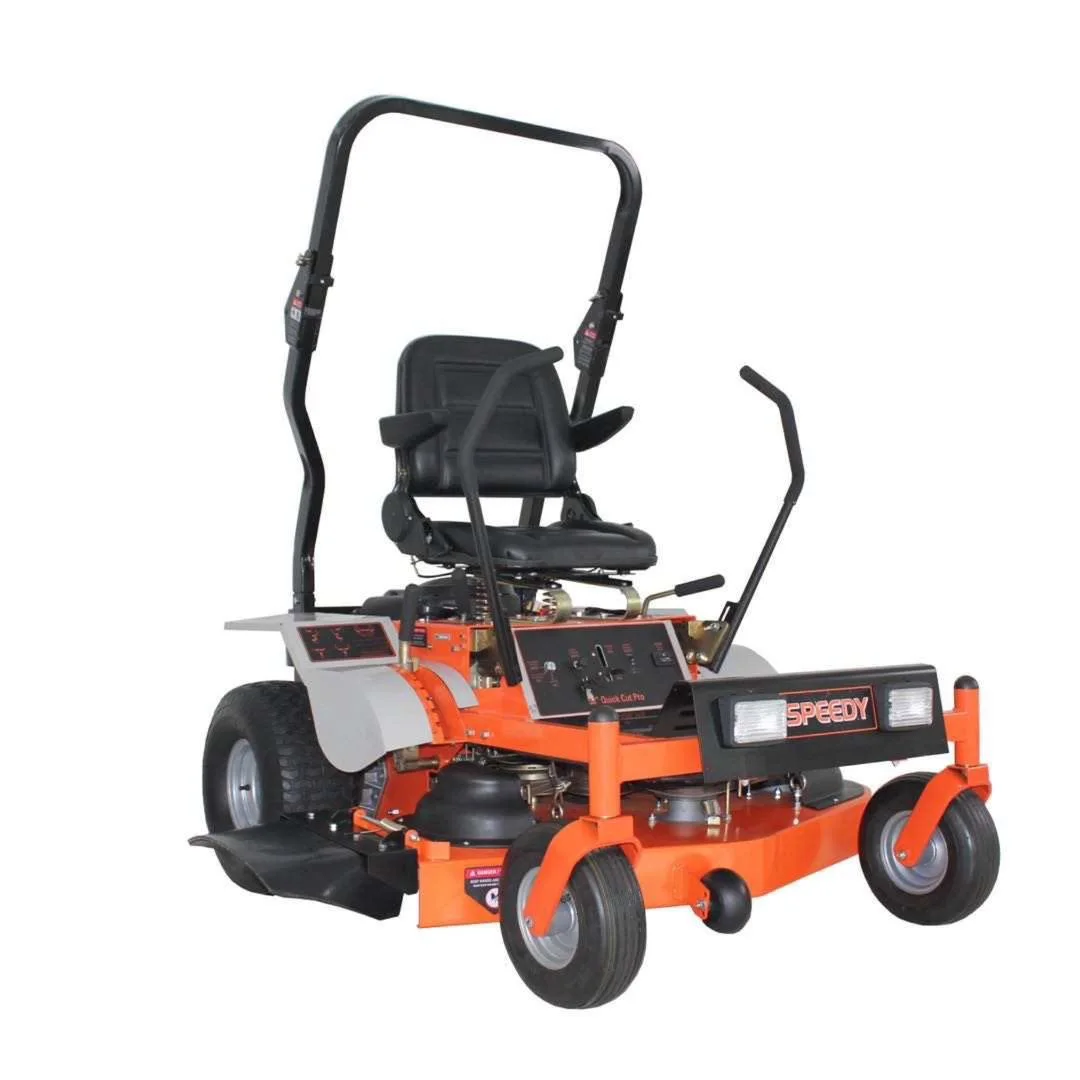
A remote-control mower can help manage vegetation.
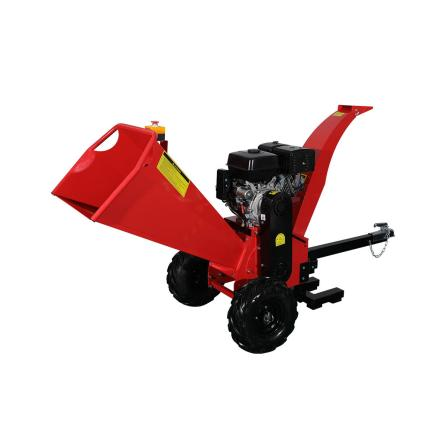
A wood chipper can process branches and green waste.
A sawmill can turn suitable logs into usable timber.
A log splitter can further process firewood.
Each machine addresses a different part of the forestry and landscaping workflow.
The forestry and landscaping machinery industry is changing from a simple equipment-purchasing model toward a more application-focused approach.
Users increasingly want to know not only what a machine can do, but how it fits into their complete workflow.
That shift is positive for manufacturers because it encourages better communication between machinery suppliers and end users.
At Kesen Machinery, our goal is to continue developing practical forestry and garden machinery around real customer requirements.
Whether the task is mowing difficult terrain, processing branches, cutting logs, or splitting firewood, the most valuable equipment is ultimately equipment that solves a real problem efficiently.
Wood waste does not always have to be a burden.
With the right equipment and the right workflow, it can become part of a more efficient system of forestry, landscaping, and resource management.
 Hot News
2026-06-16
2024-12-26
2024-12-26
2024-10-11
2024-09-18
2024-09-09
Kesen Machinery was founded in 2003 with the goal of producing high-quality products for customers and providing world-class equipment support for all forestry and construction customers.
Copyright © Shandong Kesen Machinery Manufacturing Co., Ltd. All Rights Reserved- Privacy Policy- Blog
 EN
EN