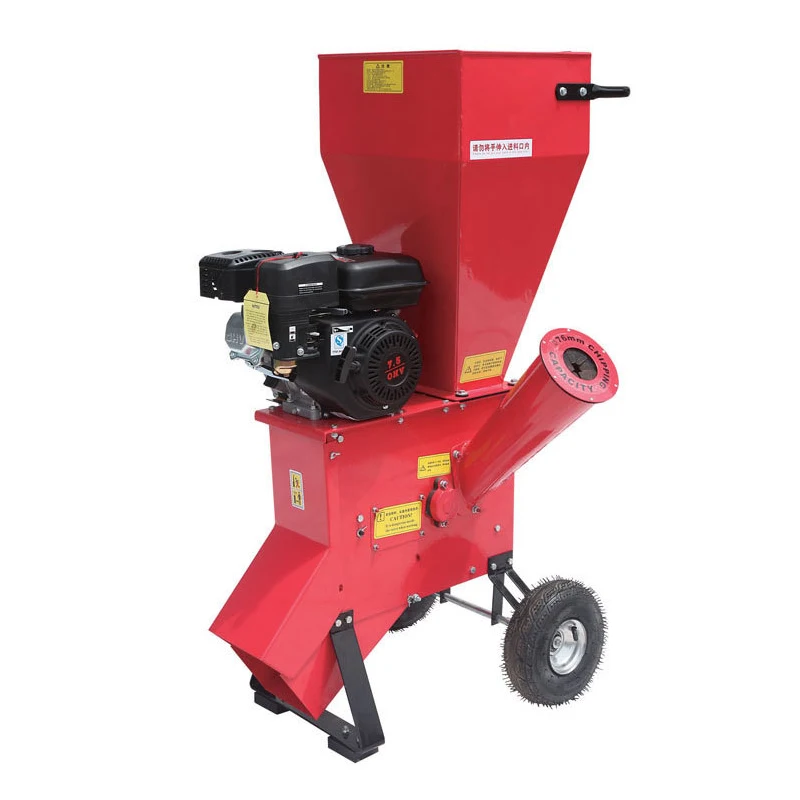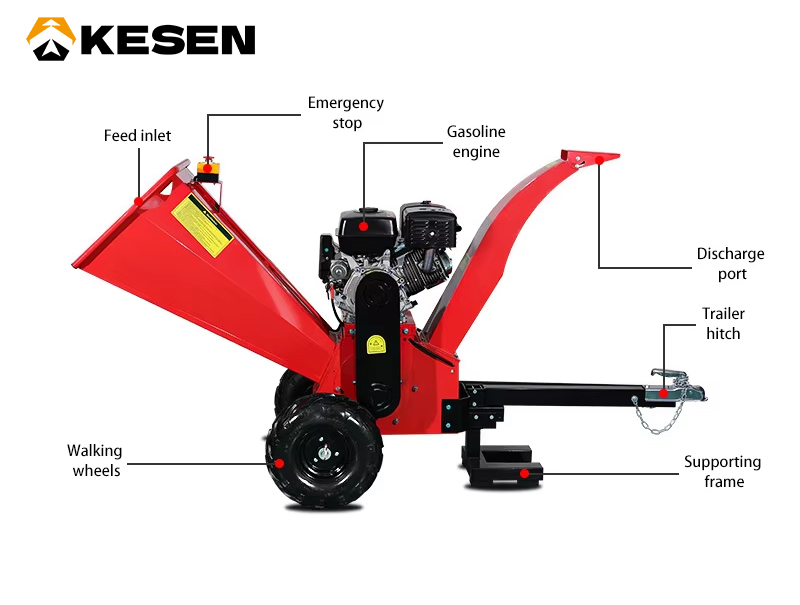
A wood chipper looks simple on paper — an engine, blades, a hopper, and a discharge chute. But the gap between a machine that frustrates your crew and one that pays for itself in a single season comes down to six specifications most buyers overlook. Whether you are a municipal contractor, orchard manager, or a distributor building a commercial product line, understanding these six parameters will prevent the most expensive mistake in equipment procurement: buying a machine that is technically functional but practically wrong for your workload.
The feed opening determines what can go into the machine without pre-cutting. A 100mm opening means every branch over 100mm must be trimmed before feeding. A 150mm opening accepts most residential and light commercial material. A 200mm or larger opening handles substantial limbs without stopping the workflow.
The cost of an undersized feed opening is not the price difference — it is the labor of the person standing next to the chipper with a chainsaw. Over a 40-hour week, 15 minutes of pre-cutting per hour adds up to 10 hours of wasted labor. Choose your feed opening by looking at your typical material size, not the spec sheet maximum.
Wood chipper blades fall into two categories: straight knives for clean chipping and hammer-style flails for shredding mixed material. The more critical variable is blade material.
Hardened alloy steel blades hold their edge through hundreds of hours. Softer carbon steel dulls faster, producing uneven chips and requiring frequent replacement. A set of four blades can cost 300 — replacing them every 80 hours instead of every 300 hours adds up fast. Ask the manufacturer for the Rockwell hardness rating and estimated blade life. If they cannot give you a number, assume frequent blade purchases.
Horsepower is the most advertised spec on any wood chipper — and the most misleading. A 15HP engine on a direct-drive chipper behaves very differently from a 15HP engine on a belt-driven machine with a heavy flywheel. The flywheel stores rotational energy and delivers it in bursts when material hits the blades, letting the engine recover between cuts. Without sufficient flywheel mass, that same engine bogs down on every branch over half its rated diameter.
For commercial users, look beyond the horsepower number. Ask about flywheel weight, the drive system (direct, belt, or hydraulic), and the maximum continuous branch diameter the machine handles without slowing. A machine rated for 150mm that can only sustain 100mm in continuous operation is a 100mm machine wearing a 150mm badge.
Blade configuration, screen size, and discharge velocity all affect chip size. A landscaper needs consistent 25-40mm mulch. A biomass boiler needs smaller, uniform particles. A contractor clearing brush may not care — as long as volume reduction is sufficient.
Machines with adjustable discharge screens or reversible blades give you control. If your end use matters — mulch sales, biomass fuel, composting — make output adjustability a requirement.
Three factors determine mobility: total weight, tow-bar design, and center of gravity. A machine under 750 kg can be towed behind a standard pickup without a special license in most jurisdictions. Above that, trailer brake requirements and vehicle class restrictions apply. A well-designed tow bar with a swivel hitch and balanced axle makes highway-speed towing stable; a poorly balanced machine sways dangerously above 60 km/h. For operations that move daily, prioritize towing stability over raw weight savings.
Wood chippers are powerful machines. A feed control bar that stops the rollers instantly, an emergency stop within the operator's reach, and a discharge chute that can be aimed away from pedestrians are not optional — they are the minimum for safe commercial operation.
CE certification ensures the machine meets European safety directives, including guarding, noise limits, and emergency stop requirements. For North American buyers, EPA compliance covers emissions. If your operators are employees or your machines are rented to third parties, the liability of non-certified equipment far exceeds any upfront savings. Confirm the machine carries certification relevant to your market and that the documentation is current and verifiable.
Before you contact suppliers, write down five numbers: your typical branch diameter, daily operating hours, required chip size, towing vehicle capacity, and the certifications your market requires. With those five numbers, you can eliminate 80% of the machines on the market in five minutes.
A wood chipper is a revenue-generating asset. The right machine turns brush into billable hours. The wrong one turns your maintenance budget into a black hole. The difference is in these six specs — and in asking the supplier to prove every claim with a number, not a promise.
Shandong Kesen Machinery manufactures a full range of wood chippers and chipper shredders with feed capacities from 50mm to 500mm+, powered by gasoline, diesel, and electric options. All machines carry CE certification. Contact us with your five operational numbers and we will match you to the right model — not the most expensive one.
 Hot News
2026-06-16
2024-12-26
2024-12-26
2024-10-11
2024-09-18
2024-09-09
Kesen Machinery was founded in 2003 with the goal of producing high-quality products for customers and providing world-class equipment support for all forestry and construction customers.
Copyright © Shandong Kesen Machinery Manufacturing Co., Ltd. All Rights Reserved- Privacy Policy- Blog
 EN
EN