Moving a mature tree sounds like a contradiction. Trees grow roots deep and wide precisely because they aren't meant to move. Yet professional landscapers, municipal crews, and large-scale nursery operators do it routinely — transplanting trees that took decades to grow without killing them in the process. The tool that makes this possible is the tree spade machine.
This article explains how tree spades work, where they're used, and what to look for when selecting one for professional or commercial operations.
What Is a Tree Spade Machine?
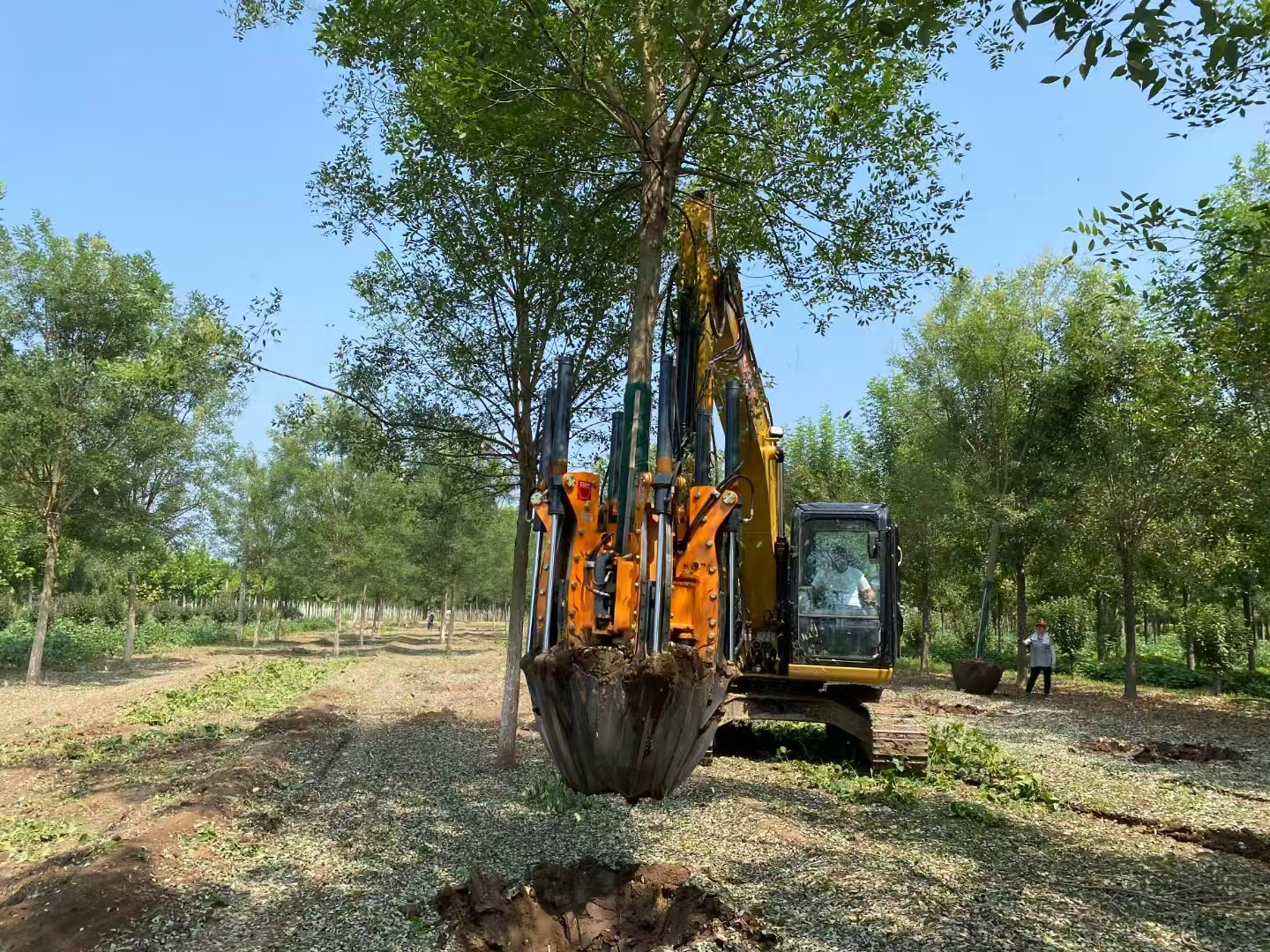
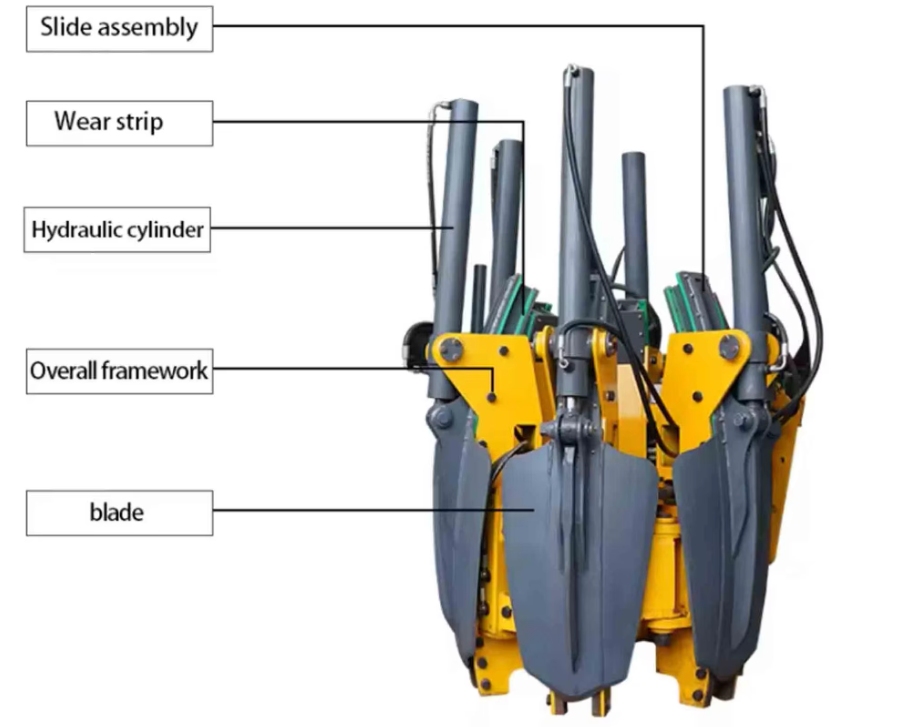
A tree spade is a piece of heavy equipment designed to excavate, lift, and transplant trees while keeping the root ball intact. Instead of digging around a tree by hand — a process that severs roots and exposes them to air for extended periods — a tree spade uses a set of large curved blades that drive into the soil simultaneously around the trunk, cutting a cone-shaped or cylindrical root ball in a single, controlled motion.
The result is a tree that comes out of the ground with its root system essentially undisturbed, wrapped in the original soil it grew in. When replanted into a pre-dug hole of the same shape, the tree experiences minimal transplant shock and continues growing with little interruption.
How the Process Works
A professional tree transplant using a spade machine typically follows four steps:
1. Site assessment. The operator measures the trunk diameter to select the correct spade size. As a general rule, the root ball diameter should be roughly ten to twelve times the trunk diameter. A tree with a four-inch trunk needs a root ball of roughly forty to fifty inches across.
2. Destination hole first. Before the tree is dug, the receiving hole is prepared using the same spade. This ensures a precise fit — the root ball drops into a hole shaped exactly to match it, eliminating air pockets and reducing settling.
3. Excavation. The spade blades are positioned around the base of the tree and driven into the ground hydraulically. Depending on soil conditions, this takes two to five minutes. The blades close underneath the root ball, severing the taproot and lifting the entire package cleanly.
4. Transport and replanting. The tree is transported to its new location — on the spade itself for short distances, or loaded onto a flatbed for longer moves — and set into the prepared hole. The blades retract, the soil is backfilled, and the tree is watered in.
Done correctly, a mature tree can be transplanted and showing new growth within a single growing season.
Where Tree Spades Are Used
Tree spade machines serve a wide range of professional applications:
Nursery operations: Moving field-grown stock from growing rows to holding areas or direct to customers. Spades allow nurseries to sell mature trees that would be impossible to dig by hand at commercial volume.
Municipal landscaping: Relocating established trees during road construction, utility work, or urban development projects where preservation of mature trees is required.
Golf courses and resorts: Transplanting large specimen trees to create immediate visual impact in new developments or renovated areas.
Land development: Saving valuable trees from demolition zones by relocating them to parks, campuses, or other landscaped areas before construction begins.
Residential and estate landscaping: Moving mature trees within a property to redesign a garden without losing years of growth.
Types of Tree Spade Machines
Tree spades come in several configurations, each suited to different scales of work:
Truck-mounted spades are the most common in professional landscaping. The spade mechanism is mounted on a heavy-duty truck chassis, combining transport and transplanting capability in one vehicle. They handle medium to large trees efficiently.
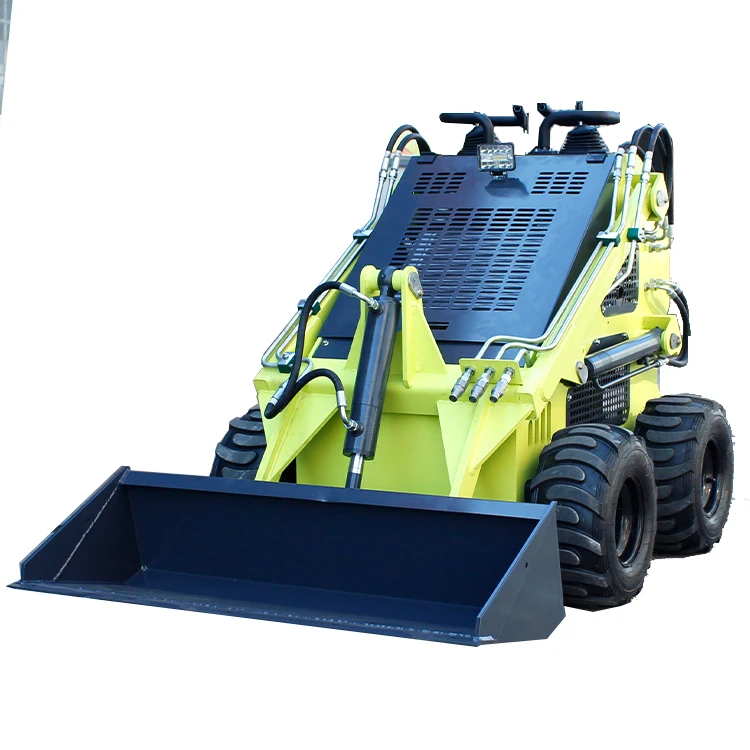
Skid steer-mounted spades attach to a skid steer loader and are well suited to confined spaces — urban job sites, tight nursery rows, or areas where a full-size truck can't maneuver. They handle smaller trees but offer excellent agility.
Tractor-mounted spades are common in nursery and agricultural settings where a tractor is already the primary work vehicle. They offer good versatility across soil types and are easy to attach and detach.
Self-propelled spades are purpose-built transplanting machines used in large-scale nursery operations where volume and speed are the priority.
What to Look for in a Tree Spade Machine
Blade size and tree capacity. Spades are rated by the diameter of the root ball they can excavate. Match the machine's rated capacity to the typical tree size in your operation — undersized blades damage root systems, and oversized equipment is inefficient on small stock.
Hydraulic system quality. The blades must close with consistent, controlled force across all soil types. A well-engineered hydraulic system provides smooth, even pressure without blade flex or binding. Inconsistent pressure causes uneven cuts and broken root balls.
Build material and durability. Blades operate under extreme soil pressure and encounter rocks, clay, and compacted ground regularly. High-grade steel construction with proper heat treatment determines how long the blades hold their edge and shape under real working conditions.
After-sales support and parts availability. A tree spade is a piece of working equipment — blades wear, hydraulic seals need replacement, and cutting edges eventually need resharpening or replacement. A manufacturer that guarantees parts availability for five or more years protects your investment and keeps the machine productive across its full service life.
Certification and build standards. For operations importing equipment into European or North American markets, CE certification ensures the machine meets baseline safety and engineering standards.
Why Proper Equipment Makes the Difference
Tree transplanting is only as successful as the equipment used to execute it. A root ball that cracks during extraction, blades that bind in heavy clay, or a hydraulic system that delivers inconsistent pressure can turn a straightforward job into a lost tree and a disappointed client.
At Kesen Machinery, our tree spade machines are manufactured across self-owned production bases in Shandong, China, and built to CE certification standards. Every machine passes through a five-stage quality control process — from raw material inspection through double full inspection at shipment — with complete material traceability. We back our equipment with a five-year spare parts guarantee, and sample orders are available from a single unit with delivery in 30 days.
The Bottom Line
Tree spades turn one of landscaping's most difficult challenges — moving a mature tree — into a repeatable, professional operation. When the equipment is well-built and properly matched to the job, transplanted trees thrive, clients are satisfied, and the operation runs efficiently at scale.
If you're evaluating tree spade options for your nursery, landscaping business, or municipal fleet, contact our team with your typical tree size range and site conditions. We'll help you identify the right configuration for the work you actually do.
 Hot News
2026-06-16
2024-12-26
2024-12-26
2024-10-11
2024-09-18
2024-09-09
Kesen Machinery was founded in 2003 with the goal of producing high-quality products for customers and providing world-class equipment support for all forestry and construction customers.
Copyright © Shandong Kesen Machinery Manufacturing Co., Ltd. All Rights Reserved- Privacy Policy- Blog
 EN
EN