For generations, lumber milling was the exclusive domain of large industrial operators. The capital cost of fixed circular saw installations, the infrastructure required to move and store heavy timber, and the minimum viable throughput needed to justify the investment put primary processing out of reach for small landowners, rural contractors, and independent timber traders. That equation has fundamentally changed.
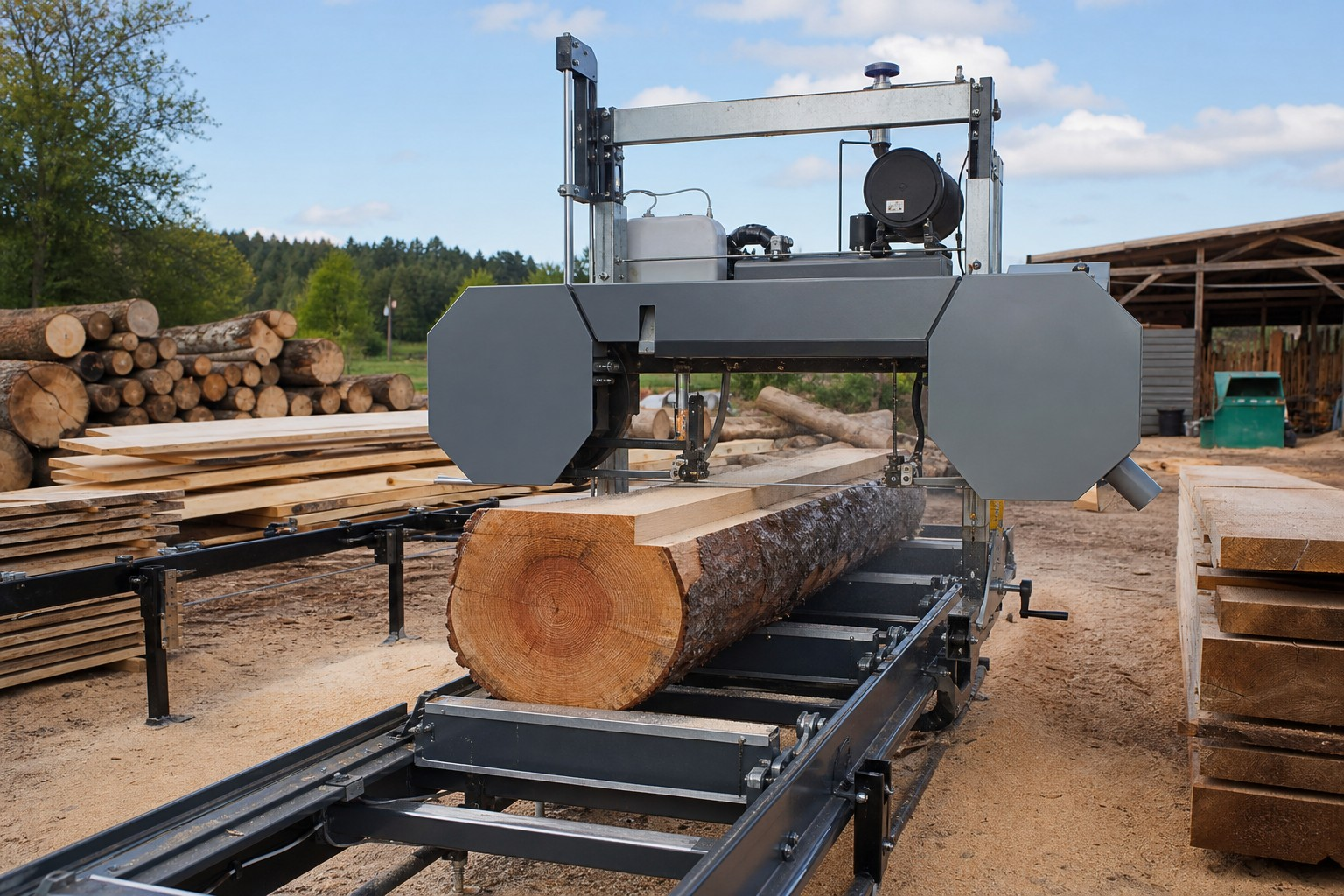
Portable band saw sawmills have made it economically viable to process timber at the source — in plantation lots, at rural construction sites, on small family timber holdings, or in compact dedicated yards — with machinery that arrives on a trailer, sets up in under an hour, and produces dimensional lumber that sells at retail or near-retail margins. The value-add between a raw log and a planed, dried plank is typically 200 to 400 percent. Band saw sawmill operators who process their own timber capture that margin directly.
The choice between band saw and circular saw technology is not simply a matter of size — it reflects a fundamentally different approach to timber conversion efficiency. For small-scale operators, the band saw has three structural advantages:
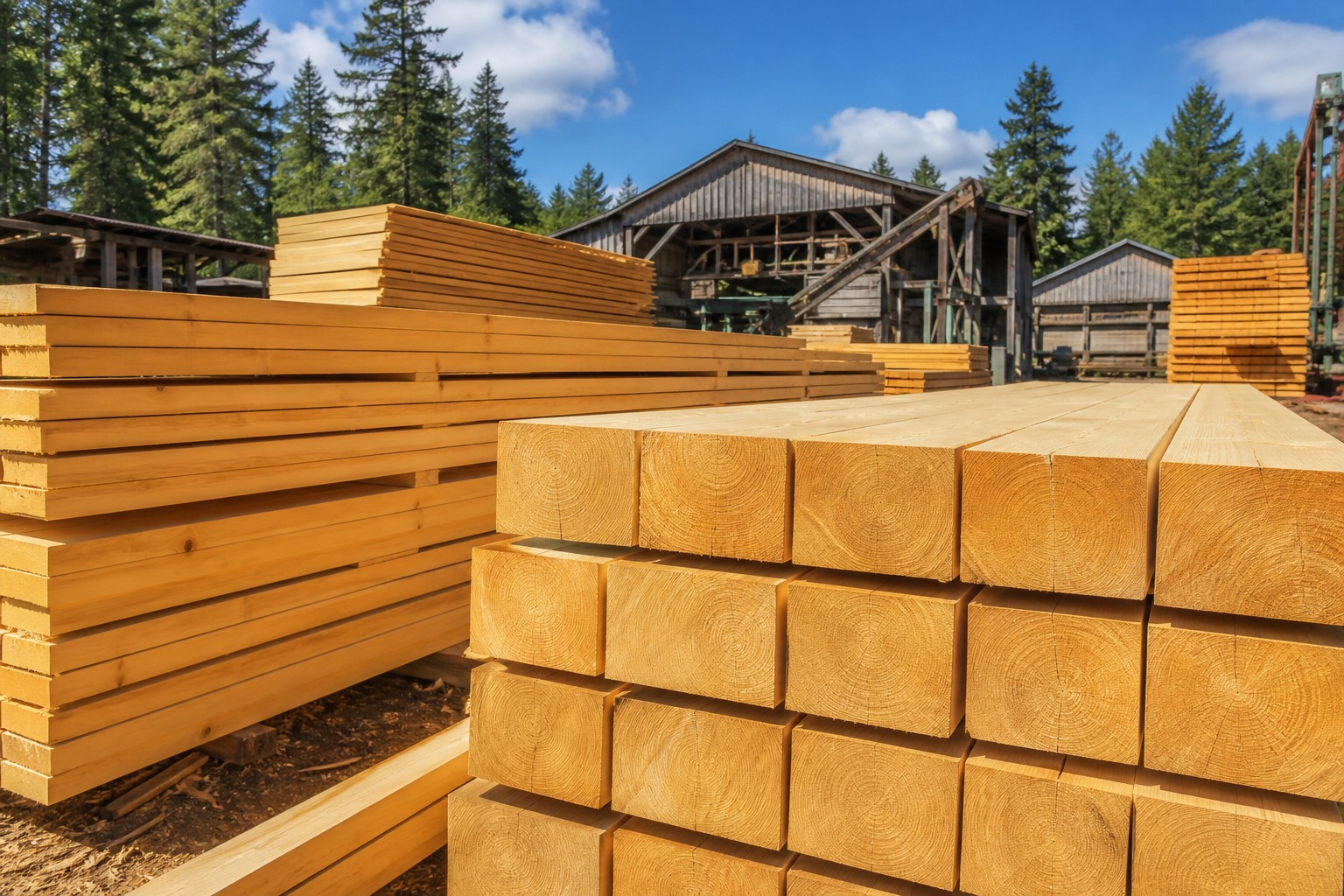
Uniformly dimensioned lumber ready for drying and sale — the consistent output quality that defines a profitable small-scale sawmill operation
Kesen's band saw sawmill range is designed around the real-world diversity of small-scale timber operations. Key configuration variables include:
For equipment distributors, the small-scale sawmill segment has characteristics that distinguish it from higher-volume commodity machinery categories. Buyers are typically owner-operators making a long-term investment decision — they research carefully, value technical support highly, and represent strong repeat customers for blades, guides, and consumables over a machine lifetime of 10 to 15 years.
Emerging markets across Sub-Saharan Africa, Southeast Asia, and Latin America represent the fastest-growing demand base, driven by expanding rural construction activity, increasing timber value awareness among small landowners, and growing NGO and government programmes promoting value-added processing at the community level. Kesen machines are CE and EPA certified, clearing import compliance in primary export markets, and the company's five-year strategic parts supply commitment protects distributor service revenue across the full machine lifecycle.
"A portable band saw sawmill doesn't just process timber — it relocates the value-add margin from the industrial mill to the person who owns the land and grows the trees."
The most common specification mistake in the portable sawmill category is buying on maximum log diameter alone. Real-world performance is determined by the combination of engine power, blade tension system quality, carriage rail precision, and after-sales blade availability in the buyer's market. Kesen's pre-sale process covers all four dimensions — and provides local blade sourcing guidance as part of the standard distributor onboarding package.
Explore the full Kesen band saw sawmill range at www.shandongkesen.com/band-saw-sawmill, or contact the Kesen team directly via WhatsApp at +86-189 53266099 to discuss model selection, volume pricing, or OEM partnership options for your regional market.
— Kesen Machinery: Precision Milling, Wherever the Timber Grows —
 Hot News
2026-06-16
2024-12-26
2024-12-26
2024-10-11
2024-09-18
2024-09-09
Kesen Machinery was founded in 2003 with the goal of producing high-quality products for customers and providing world-class equipment support for all forestry and construction customers.
Copyright © Shandong Kesen Machinery Manufacturing Co., Ltd. All Rights Reserved- Privacy Policy- Blog
 EN
EN